

8 fantastic things to do in Kochi, Kerala (+ one bonus)
Planning to visit Kochi in Kerala during your trip to South India? After spending 2 days in Kochi (also known as Cochin), I’m sharing my best tips to make the most of this charming port city — things to do in Kochi, where to eat, where to stay, and my favourite neighbourhoods. Follow the guide!
It’s 7 a.m. when our taxi drops us off in Kochi in Kerala (or Cochin — both names are used interchangeably). The heat is already stifling. In the colonial lanes of Fort Kochi, the city’s historic district, it’s hard to believe we’ve actually arrived in India — this land of mystery and contrasts. Yet, Kochi didn’t quite charm us at first. It was only the next morning, from the rooftop of our hotel, that we began to understand its uniqueness.
Built on a peninsula and a network of small islands connected by bridges, this old port city is surrounded by water — a defining feature of Kerala itself. But what struck us most was its blend of influences. Over the centuries, Cochin in Kerala has been shaped by Arab traders, followed by Portuguese, Dutch and finally British colonisers. Church steeples, red-tiled roofs and European façades rise amid lush tropical vegetation, contrasting beautifully with the distinctly Asian architecture.
Between colonial relics, Hindu temples, whitewashed churches, bustling markets, traditional Chinese fishing nets and bursts of colourful street art, Kochi in Kerala reveals an unexpected side of India — multicultural, creative and surprisingly laid-back. Yet beneath that calm exterior, the familiar chaos of India is never far away: the honking of horns, lively crowds, fish drying in the sun and the constant whirr of tuk-tuks create a soundtrack that’s unmistakably Indian. And so, at this crossroads of cultures, began our two-week adventure through Kerala.
Truth be told, I didn’t expect to fall for Kochi. But its towering trees, vibrant energy and rich colours eventually won me over. It may not be the most striking or photogenic city in India (though I can’t compare — I’ve yet to see the rest of the country), but it offers, in its own way, a perfect introduction to the diversity and depth of South India — the ideal gateway for a journey through Kerala.
We spent 2 days in Kochi, including half a day visiting a friend in Ernakulam, the modern part of the city across the water. In this blog post, I’ll share what to see and do in Kochi in 2 days, along with my favourite places to eat, stay and explore.
Last update: 05/06/2025
Chapters - What to do in Kochi, Kerala
THINGS TO DO IN KOCHI, KERALA
Explore Fort Kochi, the historic district
First things first — it’s important to distinguish between Fort Kochi, the old town, and Kochi (or Cochin), which refers to the wider metropolitan area.
Fort Kochi takes its name from Fort Emmanuel, built by the Portuguese in the 16th century, though nothing remains of it today. This is where most of the city’s main attractions are found: the Santa Cruz Basilica, St. Francis Church (where Vasco da Gama was once buried), and of course, the famous Chinese fishing nets that line the waterfront (more on those later).
Our visit happened to coincide with the Easter weekend, so we could only admire the churches from the outside. Still, it was enough to grasp the deep roots of the Catholic community in Kerala — and their devotion, which reminded us, on a smaller scale, of the traditional processions of southern Spain.


Our hotel was right in the heart of the neighbourhood, so naturally, we began our exploration in Fort Kochi. It’s in these cobbled streets that the European influence is most visible. You’ll find an eclectic mix of old and new — from trendy cafés and grand colonial hotels to colourful street art murals and small traditional shops. Thanks to the narrow lanes, the chaos feels more contained here (though the tuk-tuks are never too far away!). And — at the risk of sounding obsessed with trees — we were mesmerised by the giant banyans towering over the buildings, and deeply grateful for the precious shade they provided in the sweltering heat.
Take a stroll down Princess Street or Burger Street, two of the most photogenic streets in Fort Kochi, perfect for browsing little boutiques or picking up a few souvenirs (don’t forget to haggle, of course).
SHOPPING TIP | If you love perfumes, stop by Imran Perfumes on Princess Street. Imran offers a wide range of handcrafted scents in beautiful glass bottles, as well as incense sticks. You’ll even find big-name brands like Dior and Armani at competitive prices. The small bottles make perfect gifts to bring back home!
The Waterfront
After exploring the centre, I couldn’t wait to get a glimpse of the sea. The Beach Walkway, a long paved promenade, stretches along the coastline north of Fort Kochi. Lined with once-majestic colonial villas now sadly falling into disrepair, it passes several iconic spots: Vasco da Gama Square, where street vendors set up their stalls, the ruins of Fort Emmanuel (of which only a cannon remains), and a few small beaches such as Mahatma Gandhi Beach and Fort Kochi Beach.
Let’s be honest — the beaches in Kochi aren’t particularly appealing. They’re polluted, littered, and not suitable for swimming. Still, it’s worth pausing for a moment to watch the traditional fishermen, standing waist-deep in the water, casting their nets in a graceful, well-practised rhythm.
In the morning, the walkway is quiet, visited only by a few fish and fruit sellers and the occasional tourist braving the heat. By late afternoon, it transforms completely. Stalls selling crafts, toys, fresh juices and souvenirs pop up along the path, and visitors pour in. The atmosphere becomes lively and cheerful — though you’ll need to elbow your way through the crowd! It’s a true local gathering spot, where families stroll, browse the stands and watch the sunset. Unfortunately, the rain robbed us of the evening colours and sent us hurrying back to our hotel.
ALSO READ | Is Varkala worth it? My honest opinion on this beach town (coming soon)


The Chinese fishing nets of Kochi (and Kerala)
The Chinese nets are without doubt the most iconic attraction in Kochi — the one that appears on every postcard.
Supported by a 10-metre-high frame made of teak and bamboo, these giant cantilevered nets reminded us of a ship’s sails. Although their origin is still debated, most agree they were introduced to the coast of Kerala sometime between the 14th and 15th centuries, possibly by the Chinese expeditions of Admiral Zheng He.
To operate them, a team of five or six men lowers the net with the tide and then hauls it back up a few minutes later, using their own body weight as a counterbalance. Sadly, this traditional technique is slowly disappearing and now serves mostly as a tourist attraction — but it remains one of the most fascinating things to see in Kochi.


I have to admit, though, that the Chinese nets were a bit of a disappointment. The rain had already robbed us of the sunset — the most photogenic time to see them — and most of the nets weren’t even in use. Without the nets unfurled, the bare wooden structures lose much of their interest. I later learned that they’re sometimes put out of operation during the dry season, which happened to coincide with our visit.
To see them in action, it’s best to come at high tide, either in the morning or early evening. Apparently, you can negotiate with the fishermen to get a closer look — or even take part in the process — for a small tip. I’d suggest checking with your hotel or a local beforehand to find out what’s considered a fair amount and avoid any tourist traps.

Bazaar Road (via Pullupalam Road)
On our second day, we decided to walk along Bazaar Road, one of the best-known shopping streets in Kochi, linking the port to Jew Town and Mattancherry Palace. From our hotel, we realised there was a street that cut straight across the peninsula — simply follow Fosse Road, which eventually becomes Pullupalam Road.
That morning, wandering through this lively, authentic part of Cochin in Kerala turned out to be one of our favourite memories of the city. It was the moment we finally started to fall under Kochi’s spell. Butchers, fishmongers, rice sellers, spice merchants, banana vendors, hardware shops — every type of trade seems to line up here, raw and unfiltered.
A word of warning for the faint-hearted: you’ll see beef and pork carcasses hanging upside down, brains on display, and fish drying under the sun. The smells are strong, but to our surprise, we weren’t particularly put off by the dirt. Honestly, we’d expected far worse!
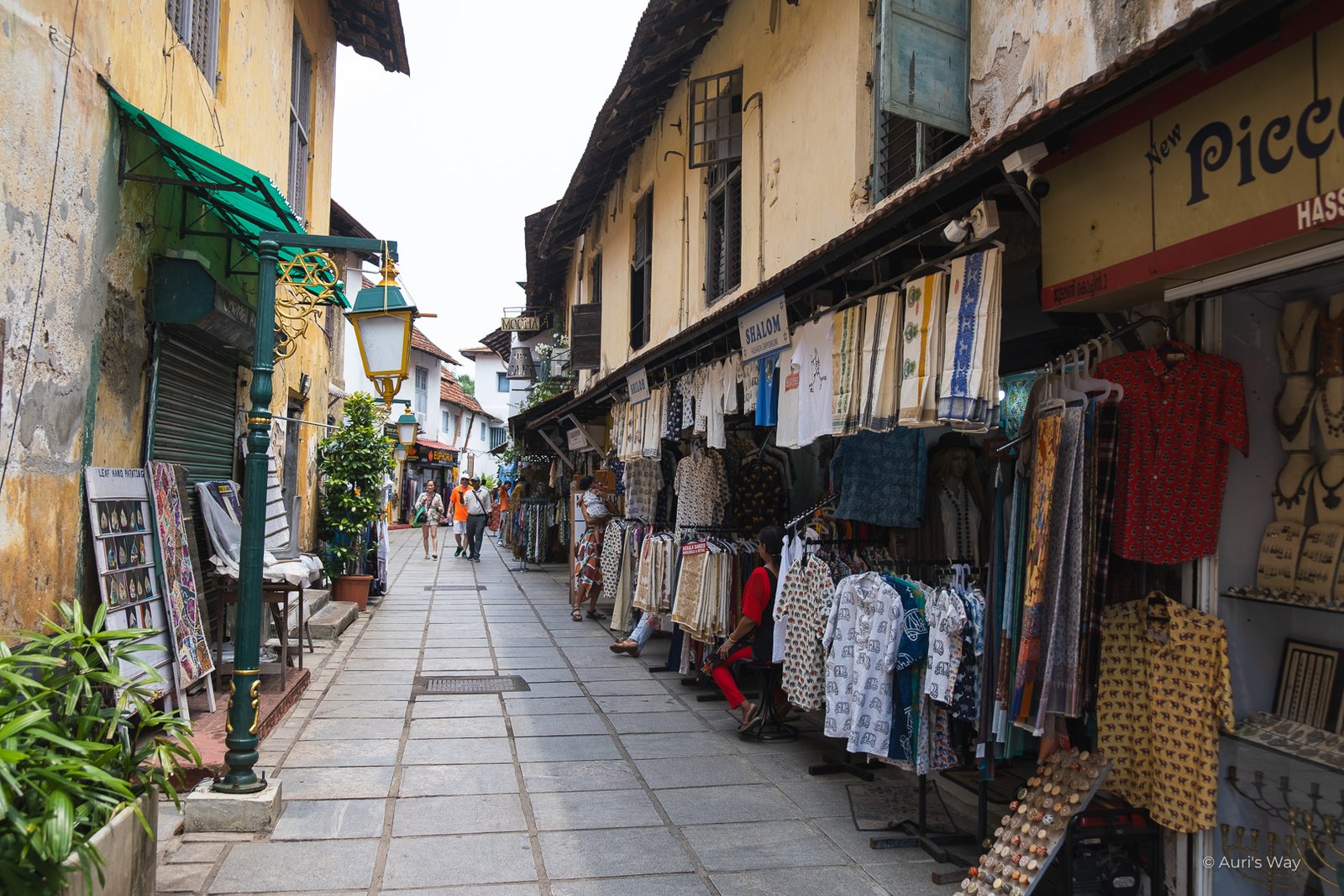
As you arrive on Bazaar Road, the atmosphere suddenly feels much calmer, cleaner and more orderly compared to the organised chaos you’ve just left behind. The vibe is definitely more touristy, but still wonderfully photogenic — with its colourful, slightly weathered façades and a touch of decadent charm. You’ll also spot a few pieces of street art, some old churches, and plenty of tea and spice shops. We loved it!
If you’re planning to visit Munnar during your trip to Kerala, I’d actually recommend waiting to buy your spices — even if it’s tempting! Most of the products sold in Kochi in Kerala come from there anyway, so you might as well purchase them directly at the source.

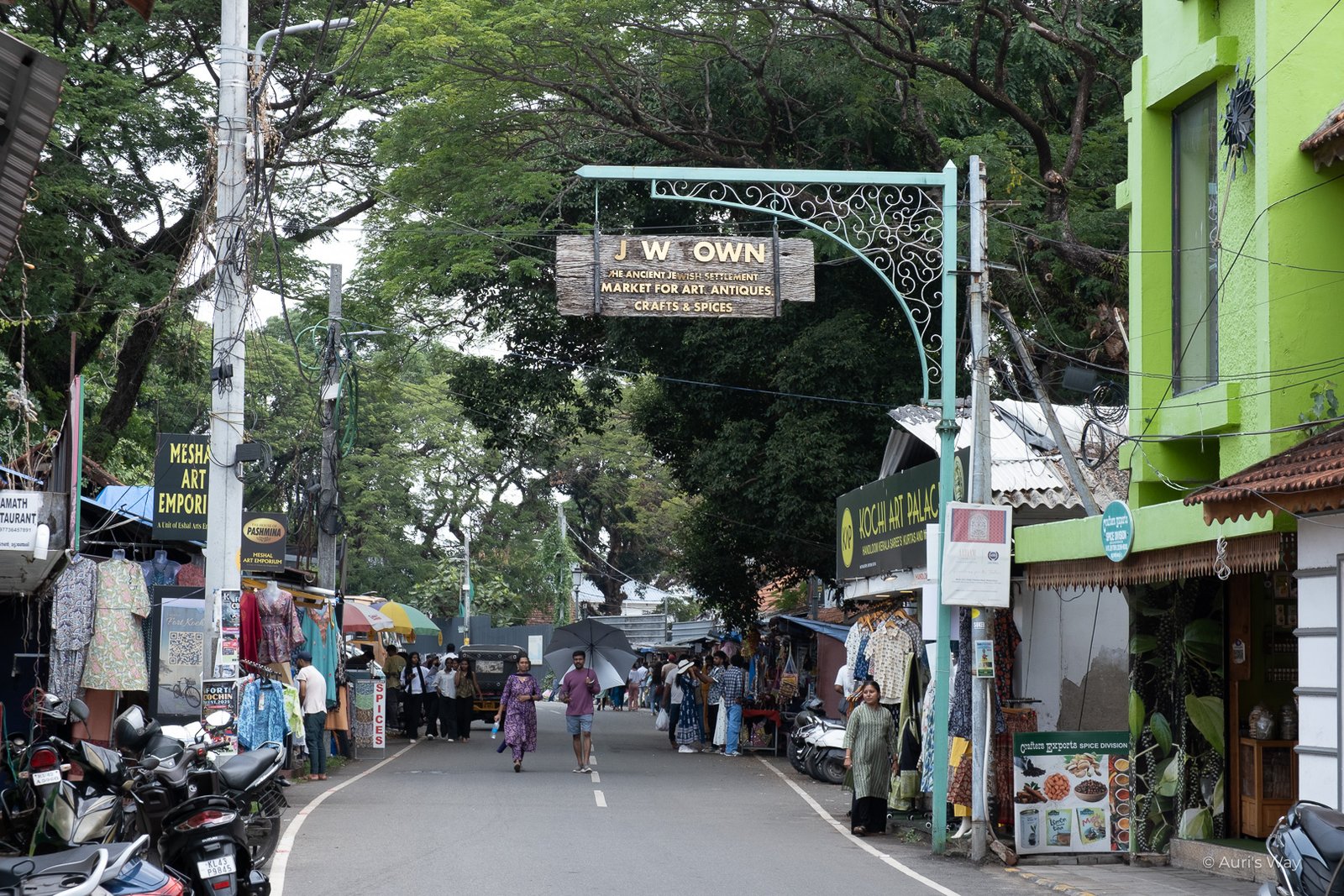
Jew Town
Present since the Middle Ages, the Jewish community of Cochin is one of the oldest in India, although no one knows exactly how it first arrived here. Today, only a handful of Jewish families still live in Jew Town.
Here’s an interesting bit of history: the Jewish community in Cochin was once divided between “White Jews”, who came from the Middle East or Europe, and “Black Jews”, who had lived in India for centuries. Although they shared the same faith, the two groups lived separately, and social distinctions persisted — even within the synagogue. The White Jews sat in the places of honour, while the others were relegated to the back. This separation, which lasted well into the 20th century, says a lot about the complexity of cultural identities — even within a single community.

Today, the neighbourhood is filled with trendy cafés, art galleries and antique shops. It certainly has charm and makes for great photos — but to be honest, we found it a little too touristy and somewhat stripped of its soul.
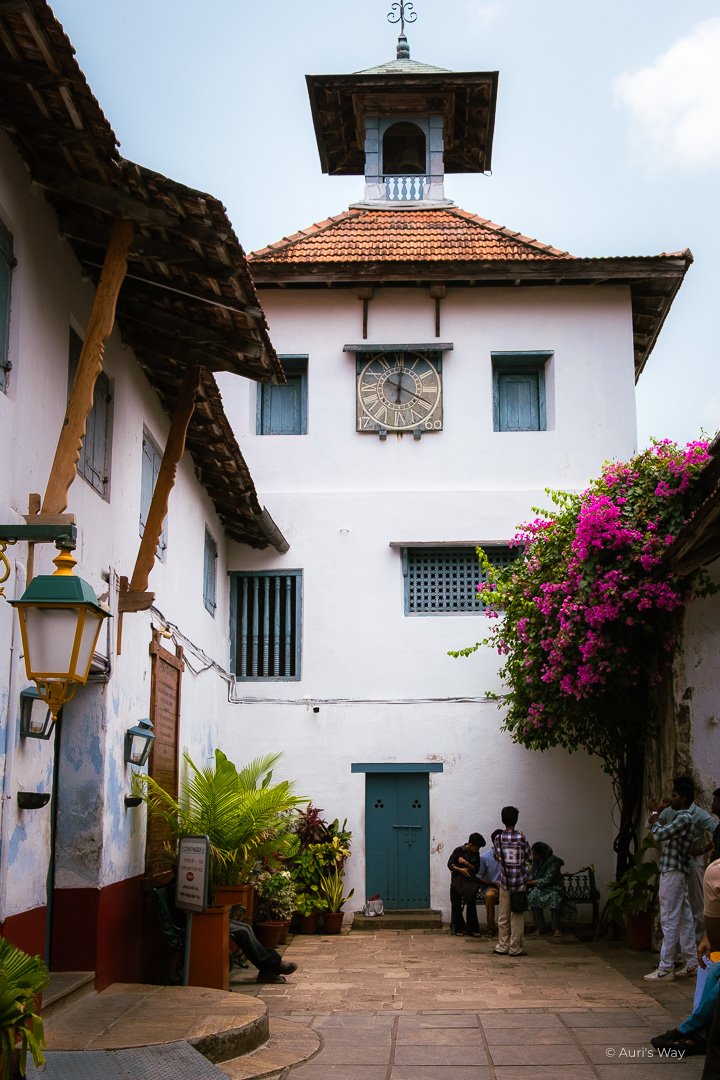
Among the main things to see in Kochi’s Jew Town are the Dutch Palace (or Mattancherry Palace) — which I’ll talk about below — and, most notably, the Paradesi Synagogue, built in 1558, making it the oldest synagogue in the Commonwealth. It was destroyed by the Portuguese in 1662 and rebuilt two years later by the Dutch. From what we’ve heard, it’s well worth a visit.
As for us… we didn’t get to see it. We had the brilliant idea of going on a Saturday — Shabbat — when, of course, it’s closed. Let’s just say we’ll blame it on the jet lag (and a tiny bit of poor planning, too).
ALSO READ | Things to do in Munnar, Kerala’s spice capital (coming soon)
HOW TO VISIT THE PARADESI SYNAGOGUE IN KOCHI |
The synagogue is open from 10 a.m. to 12 p.m. and 3 p.m. to 5 p.m. It’s closed on Fridays, Saturdays and during Jewish holidays. The entrance fee for foreign visitors ranges from 100 to 200 INR.
Visitors are required to remove their shoes and dress modestly — covering at least shoulders and knees — when entering the synagogue.
The Dutch Palace, or Mattancherry Palace
The Dutch Palace, or Mattancherry Palace, is Dutch in name only. Originally built by the Portuguese, it was later restored by the Dutch in the 17th century — hence its current title. Now transformed into a museum, it traces the history of Kerala as a whole and of Fort Kochi in particular.
Inside, you’ll find a small collection of old maps and historical artefacts, but what stood out most to me were the stunning wall frescoes depicting scenes from great Hindu epics, and the beautifully carved wooden ceilings made from rich tropical wood.

The visit is short but informative. Dripping with sweat, we probably didn’t give the exhibits quite the attention they deserved. That said, we personally preferred the Hill Palace Museum — the former residence of the kings of Kerala, located in Ernakulam. Set within a vast, tree-filled park, it felt larger and more complete, though its location outside Fort Kochi makes it a little less convenient to reach. I’ll tell you more about it later on, in case you want to compare the two.


PRACTICAL INFORMATION | The Dutch Palace is open daily from 9 a.m. to 4:30 p.m., except on Fridays. The entrance fee is just 5 INR.
It is prohibited to take photos inside the building. However, we asked permission and the guards let us take a few 🙂
ALSO READ | Kerala Backwaters: 5 authentic experiences beyond Alleppey (coming soon)
Drink a Masala Chai in an Art Café
Tasting a masala chai in Kerala is almost a rite of passage. This black tea infused with spices — cardamom, ginger, cinnamon and cloves — is enjoyed at any time of day, and it’s hard not to get hooked on its comforting, aromatic flavour.
In Kochi in Kerala, the best way to enjoy it is in one of the many art cafés that have sprung up all over the city. These hybrid spaces — part gallery, part trendy café — are often set in old colonial houses with weathered walls, lush greenery and a touch of bohemian charm. They attract both passing travellers and local artists. Admittedly, the prices are much higher than in a typical roadside tea stall, and some cafés seem designed more for Instagram than for their menu — but the setting alone is worth a visit, if only to enjoy a cool break surrounded by art.
The most famous of them all is the Kashi Art Café, a true Fort Kochi institution — known as much for its relaxed atmosphere as for its fresh juices and hearty salads.


Watch a Kathakali Performance
Attending a Kathakali show is one of the most fascinating things to do in Kochi. This traditional dance-drama, native to Kerala, combines elaborate makeup, striking costumes, expressive gestures and intense storytelling — a true feast for the senses.Performed for centuries in temples and royal courts, Kathakali depicts episodes from Hindu epics like the Mahabharata and the Ramayana. Each gesture, eye movement and facial expression carries meaning, and the performers undergo hours of preparation before stepping on stage. Watching them apply their makeup — often done in front of the audience — is already a spectacle in itself.In Kochi in Kerala, the most popular place to experience it is the Kathakali Centre in Fort Kochi, which offers daily performances for visitors. Try to arrive early to observe the actors getting ready — it’s an experience you won’t forget.
BOOKINGS | You can book your Kathakali show online, directly at the venue, or through your hotel. Payment can be made in cash at the centre or via bank transfer. Make sure to book in advance if you want to get a good seat!
BONUS: Hill Palace Museum in Ernakulam
Facing the historic island of Fort Kochi, Ernakulam represents the modern face of the city in all its density: colonial buildings give way to contemporary towers, shopping malls, private hospitals and other urban infrastructures. This is where the region’s economic heart beats — and where much of Cochin’s middle and upper classes live.
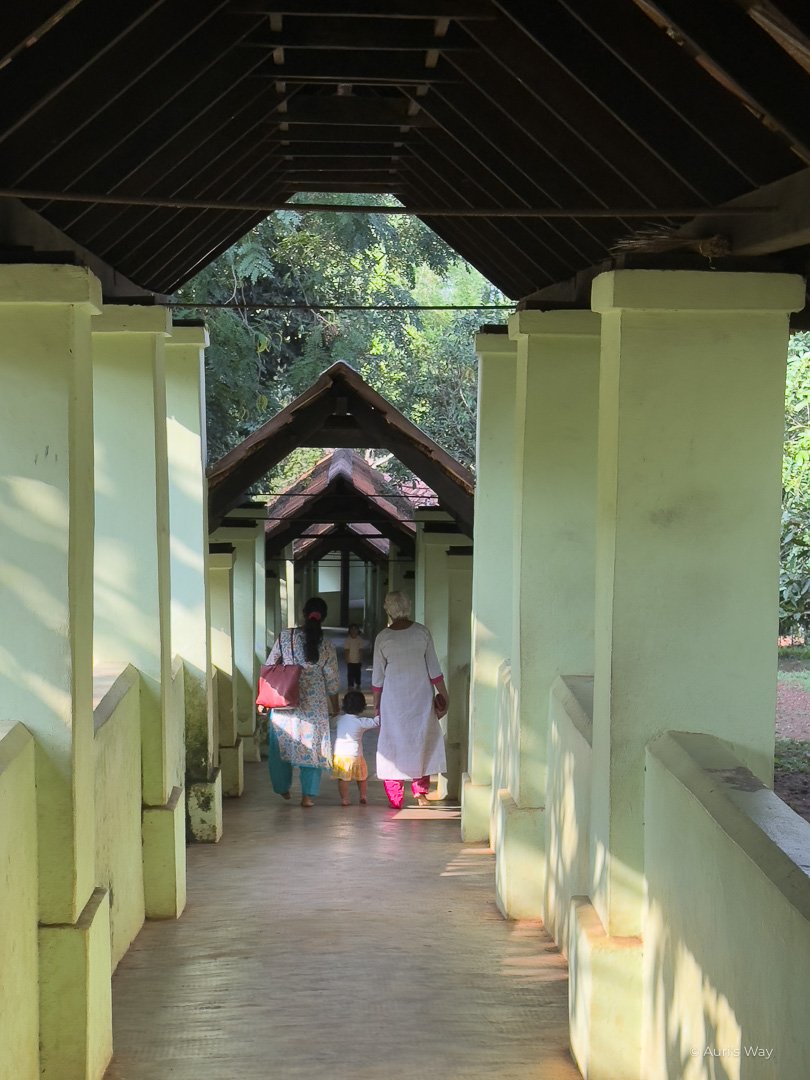
But before becoming the commercial hub it is today, Ernakulam was once home to the royal family of Cochin. Located on a hill about 30 minutes by Uber from Fort Kochi, the Hill Palace Museum is the most tangible legacy of that era. This vast palace has been converted into a museum, set within a sprawling green park that alone makes the trip worthwhile.
Inside, the visit is well organised and relatively comprehensive: you’ll find royal artefacts, period furniture, and numerous pieces illustrating the history of Kerala and its local monarchy. Far from the bustle of the city, the museum offers a peaceful and educational escape — all within an exceptionally pleasant setting.


BEST RESTAURANTS IN KOCHI
In Cochin — and throughout Kerala, really — you eat well. Exceptionally well. Whether it’s in a small local eatery or a trendier café, the food is flavourful, generous and often vegetarian. Here are a few places we personally tried (and loved) to get a taste of Kerala’s distinctive cuisine — plus a few extra recommendations we didn’t have time to explore, to give you even more options for your stay.
Coffee & breakfast
- Kashi Art Café: As mentioned earlier, Kashi Art Café is probably the most iconic café in Fort Kochi. Set in an old colonial house with a leafy inner courtyard, it offers an atmosphere that’s equal parts artistic, peaceful and slightly bohemian. You enter through a small contemporary art gallery — a perfect introduction to the creative spirit of the place.
The menu features hearty breakfasts, fresh juices, salads and light meals more in line with Western tastes. The masala chai is pricier than elsewhere (around twice the usual rate), but this is the perfect spot to catch your breath after arriving in Kochi in Kerala — or simply to enjoy a quiet break surrounded by art.
- Kochi Kapital Kafé: Less well-known than Kashi Art Café, this highly rated spot offers a more intimate atmosphere, with a simple, unpretentious interior. Although we didn’t get the chance to try it ourselves, the menu features light, Western-inspired dishes for a change of pace — think avocado toast, tacos or waffles.
- Pepper House: Half café, half bookshop and art gallery, Pepper House is an unusual and charming place set in a former spice warehouse overlooking the waterfront. You can enjoy a chai, browse through a book or simply relax in the large inner garden. The venue also serves as an artist residency and regularly hosts contemporary art exhibitions — a must-see for anyone looking for creative things to do in Kochi.
- Loafers Corner Café: Perched on the first floor of an old corner building, Loafers Corner Café offers a cool, slightly retro vibe with vintage decor and a perfect view over the bustle of Princess Street below. It’s the ideal spot to take a refreshing break, read a book or simply watch the world go by. The menu is modest but spot-on — good coffee, tea, fresh juices and a few light snacks.
Lunch & dinner
- Kerala Café Fort Kochi: If you’re looking for a simple, no-frills spot to sample authentic Kerala cuisine, Kerala Café is a great choice. The interior is modest but clean and well kept, with quick and efficient service (by Indian standards!).
The menu features local classics like fish curry, vegetarian thalis and dosas — all at very reasonable prices for Fort Kochi. The fact that it’s popular with locals is always a good sign. This is also where we tried the Beef Nadaan Curry (and if you’re wondering how beef is on the menu in Kerala, I talk about it in my article 11 surprising cultural facts about Kerala).
- Mary’s Kitchen: It doesn’t get much more authentic or homely than Mary’s Kitchen. With its rooftop terrace facing the Santa Cruz Cathedral, this small family-run restaurant may look unassuming, but it instantly feels like dining at someone’s home. The food is homemade, served in simple dishes and prepared fresh to order. The menu features typical Keralan meals, often vegetarian, at very reasonable prices. Our absolute favourite spot in Kochi in Kerala!
- Fort Paragon: We didn’t get the chance to eat here, but Fort Paragon came highly recommended. Located near the waterfront, this restaurant is best known for its grilled fish dishes, served in a simple yet pleasant setting with a small terrace tucked away from the street. A good spot to keep in mind if you’re after a seafood dinner that’s unfussy but well executed. Prices did seem slightly higher than the Kerala average, where you can usually find meals for around 100–200 INR.
In Ernakulam
We probably wouldn’t have explored Ernakulam if we hadn’t stayed with friends in this modern part of the city. Less touristy than Fort Kochi, Ernakulam isn’t exactly where you’d expect to find great food — and yet, there are some real gems hidden here, often frequented only by locals. If you happen to be in the area or staying on this side of town, here are a few spots well worth checking out.
- Café UUTOPIA: Located in Panangad, on the southern side of Ernakulam, this was one of our absolute favourites during our stay in Kochi in Kerala. Set beside a canal in a garden strung with fairy lights, the café blends a tropical atmosphere with industrial touches — and the food was fantastic!
A word of warning: the seafood bucket is literally a whole bucket overflowing with prawns, crab and other shellfish — you’ll need a group to tackle it! About a 40-minute drive from Fort Kochi, the place attracts a cool, mostly local crowd, far from the tourist trail. It’s probably not one to squeeze into a tight itinerary, but if you’re passing through or want to experience a more modern side of Kerala, it’s absolutely worth the detour. I couldn’t leave it out!
- Salkara Express: Salkara is a well-known restaurant chain across Kerala, famous for its homely Malabari cuisine served without any fuss. Salkara Express offers a faster, more casual version — but just as tasty. The setting isn’t particularly charming, yet the dishes are delicious, the service smooth, and the prices unbeatable. Perfect for a simple lunch with local classics like beef fry or the day’s curries. Their biryani is said to be one of the best around. If you want to eat like the locals, this place is a sure bet.
WHERE TO STAY IN COCHIN IN KERALA?
In general, I’d recommend staying in Fort Kochi, where most of the restaurants, cafés, galleries and main attractions are concentrated. The neighbourhood is easy to explore on foot or by tuk-tuk, which makes the stay much more enjoyable.
By contrast, Mattancherry — quieter and slightly more off-centre — can feel rather deserted after dark, which may be unsettling for some travellers.
On the other hand, in Ernakulam, the city’s more modern area, you’ll find newer hotels that are often more comfortable and better value, along with a wide range of local restaurants. However, travelling back and forth to Fort Kochi can quickly become tiring, especially at the end of the day.
During our stay in Kochi, we stayed at Hotel Arches, a charming property housed in a former colonial house in the heart of Fort Kochi (≈ €39/night). The décor could perhaps do with a refresh, but for the price the comfort was more than acceptable, the location perfect for exploring Kochi, and the staff was lovely.
And to help you find the place that suits you best, I’ve gathered some other great accommodation options worth a look:
- Tissa’s Inn (££): I hesitated for a long time before choosing our hotel — budget eventually won out, but I have to say that this one’s colonial charm, with its beautiful wooden interiors, really caught my eye. The small rooftop pool is a definite bonus, perfect for cooling off after a day exploring Kochi in Kerala.
- Forte Kochi (£££): If you’re looking to treat yourself to a high-end boutique stay, Forte Kochi is a safe bet. Set in a beautifully restored colonial mansion, the property blends heritage charm with refined elegance — featuring tastefully decorated rooms, a lush courtyard and a lovely central pool. The service is known to be attentive, and the location, right in the heart of Fort Kochi, is perfect for exploring the area on foot.
- Old Harbour Hotel (£££): Arguably one of the most beautiful hotels in Fort Kochi, this stunning 18th-century colonial mansion has been superbly restored and exudes timeless charm. With its tropical garden, elegant pool and spacious, tastefully decorated rooms, Old Harbour Hotel offers a peaceful, refined escape. The service is reputed to be impeccable, and the on-site restaurant is often praised for its excellent cuisine. It’s certainly a splurge — but if you’re after a stay full of history, character and comfort, this is the place.
- The Postcard Mandalay Hall (££££): I know I said earlier that it’s best to avoid staying in Mattancherry… but this place is the exception. The Postcard Mandalay Hall is an intimate boutique hotel set in a former Jewish home, hidden behind a discreet, slightly timeworn façade. We wandered in out of curiosity to visit the art gallery at the entrance and the manager was only too happy to chat with us. He explained the unique concept behind this hotel chain: no fixed check-in or check-out times, and breakfast served all day long. Everything is designed to offer a highly personalised, constraint-free stay.
Art is everywhere — even in the small, leafy inner courtyard we were able to peek into. With just a few rooms, impeccable service and a tranquil, refined atmosphere, this is one of those rare finds. If our budget had allowed, this is definitely where we’d have stayed.

HOW TO GET TO KOCHI IN KERALA FROM THE AIRPORT?
The Cochin International Airport (COK) lies about an hour’s drive from the city centre, so getting to Kochi in Kerala is easiest by Uber. Our ride cost around 1,500 INR for two people (roughly €15) and took 40–50 minutes. It’s by far the most reliable option — comfortable, air-conditioned, and with a fixed fare you’ll know in advance, unlike regular taxis where negotiation can be tricky.
There used to be direct KSRTC air-conditioned buses connecting the airport with Fort Kochi, but they seem to have stopped running since Covid. If you’re travelling light and don’t mind a longer journey, public transport is still possible: take a bus to Aluva Metro Station, continue by metro to Maharaja’s College, then finish with a ferry ride to Fort Kochi. The trip takes about two hours in total — a scenic and budget-friendly way to start your adventure before diving into all the things to do in Kochi.
HOW TO GET AROUND IN KOCHI?
I always recommend walking as much as possible while visiting a new city. It’s the best way to soak up the local atmosphere, discover hidden corners, stumble upon unexpected gems, and exchange a few words with friendly locals.
When the heat becomes overwhelming or the distances too long, tuk-tuks are everywhere — just look up and you’ll spot one within seconds. Always negotiate the fare before getting in, as prices aren’t fixed.
Some drivers might suggest a “quick stop” at a so-called government-approved shop. Don’t worry — it’s a common practice. Drivers receive a small fuel commission for bringing in customers. You’re not obliged to buy anything; simply browse for a few minutes and continue your journey.
Elias even noticed a funny pattern: if someone calls you “Sir,” they’re probably trying to sell you something. If they say “my friend,” they most likely just want to chat or ask a favour. Of course, it’s not an exact science — but it proved surprisingly accurate!


Final Thoughts on Kochi in Kerala
When we first arrived, we didn’t quite know what to expect — but Kochi intrigued us, and we left with some truly memorable impressions. It’s not a city of grand monuments, spectacular architecture or breathtaking landscapes; instead, it’s a place of atmosphere, contrasts and encounters. With its multicultural heritage, colourful streets, street art and generous cuisine, Kochi captures your heart in a quieter, more subtle way.In the end, it’s the perfect gateway to Kerala — especially if you enjoy taking your time, wandering aimlessly through charming lanes, and simply observing the everyday rhythm of life around you.
KEEP PLANNING YOUR TRIP TO KERALA

Liked it? Share it!