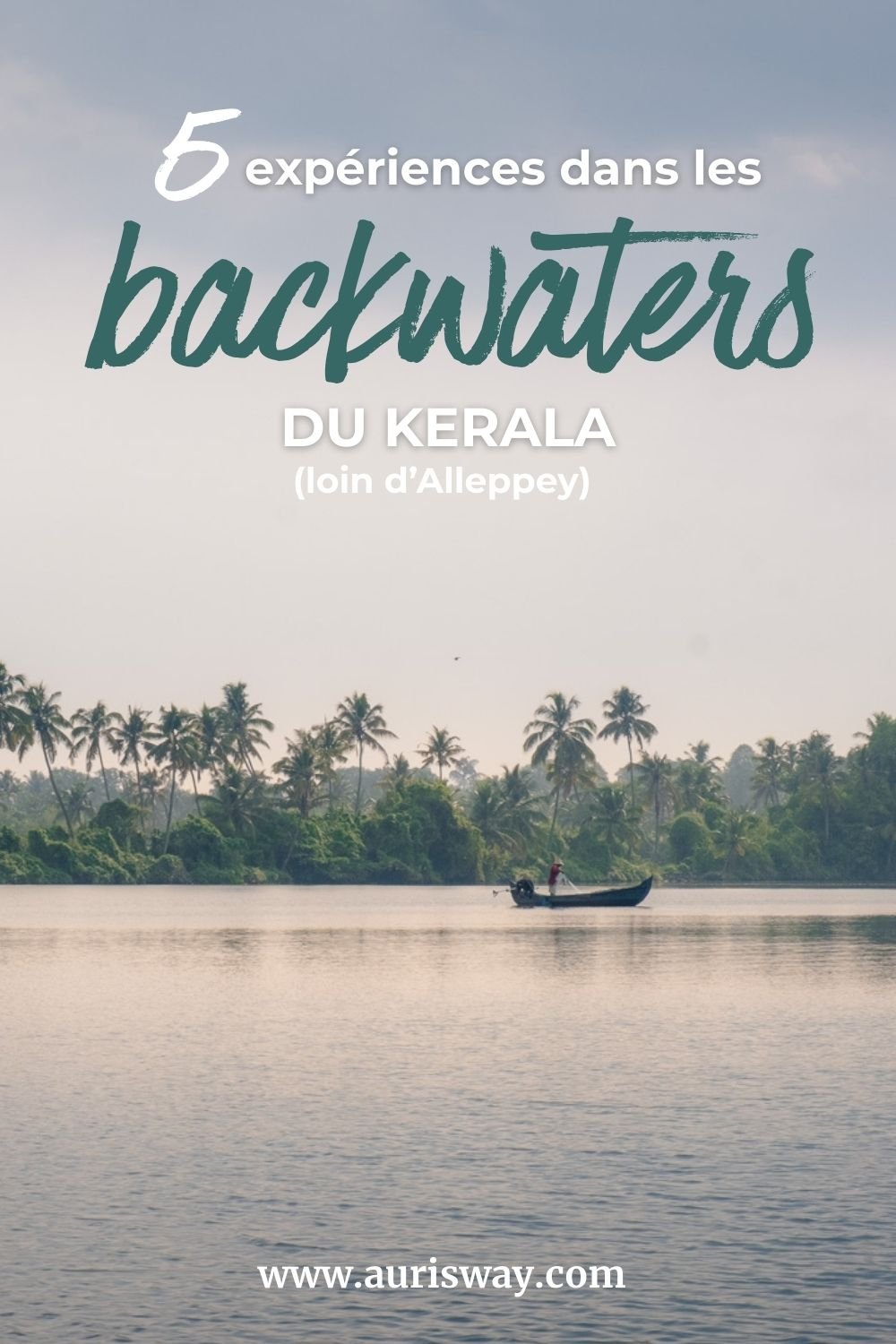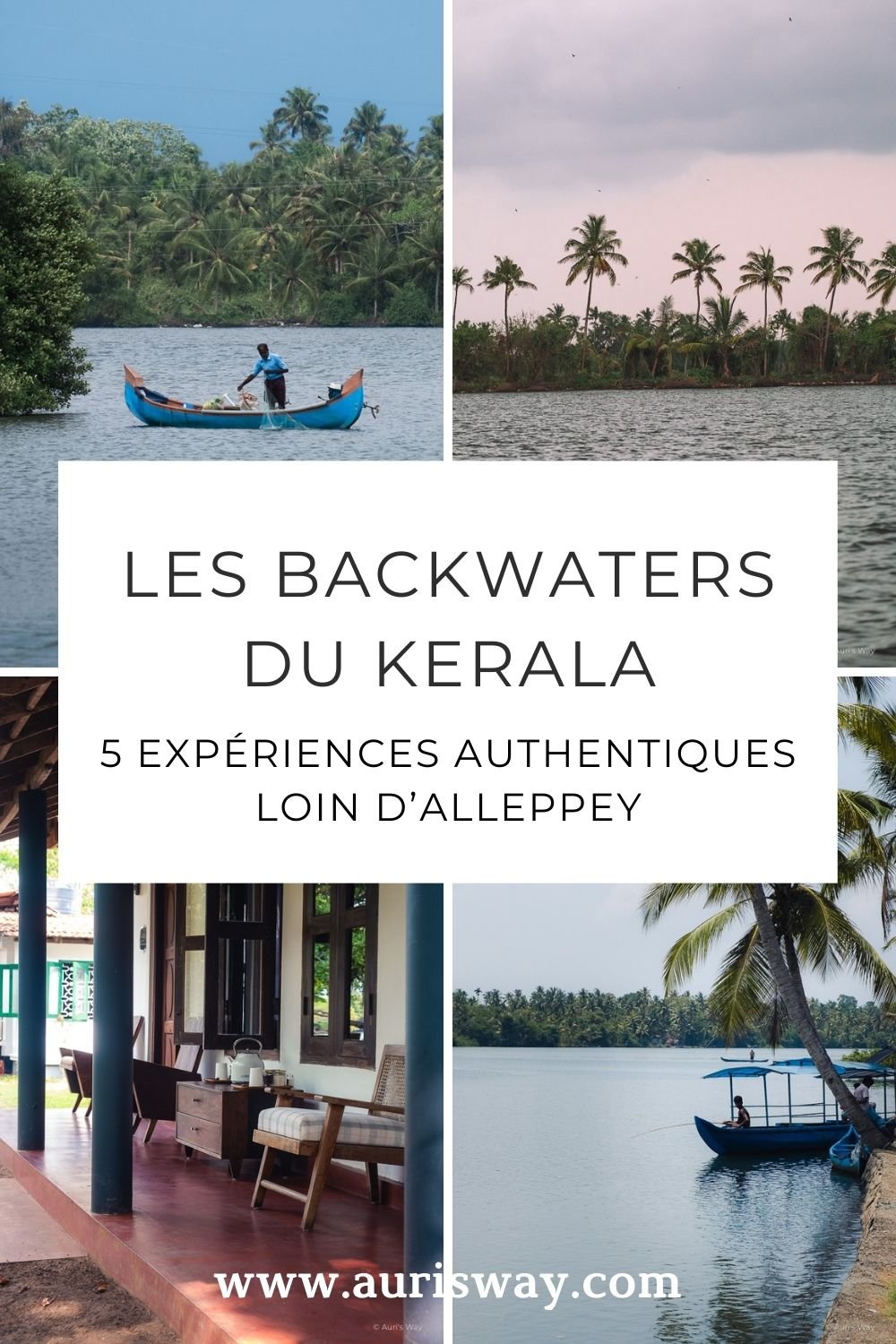

Kerala Backwaters: 5 unbeatable experiences away from the crowds
The south of India is undeniably a traveller’s dream — but what exactly should you do in the Kerala Backwaters? In this guide, I’m sharing my best tips for visiting the backwaters of Kerala without the crowds. If you’re looking for authentic experiences in the Kerala backwaters in India or wondering how to plan your trip, you’ll find here everything you need to enjoy this unique region in the best possible way.
* * *
This was the part of our Kerala trip I was looking forward to the most.
The Kerala Backwaters… even the word alone had always conjured up, for me, the tropical soul of the region. I pictured canoes gliding between coconut palms, fishing nets suspended in the morning mist, the soft ripple of water against the banks. And that is exactly what I found there.
On the tiny jetty where our guide is waiting, a few locals chat quietly while two children fish, one of them wearing a Real Madrid jersey. When we point it out, they burst out laughing. — Ronaldoooo! the boy shouts proudly, pointing to the name printed across his back.
We climb aboard a small electric motorboat — the only way to reach Kakkathuruttu (the “Island of Crows”), where our accommodation is located. Within minutes, you can feel that nature has finally taken over. The sounds soften, the air grows still, and the only encounters are birds and patient fishermen.
Once again, the sun remained shy during our time there, and the warm colours so typical of the Kerala backwaters India never quite broke through. The weather wasn’t on our side, and a few experiences we were hoping for quite literally fell through.
Yet despite that, the backwaters remain one of my fondest memories of the entire trip — for the immediate sense of peace, and the softness in the air that you can almost feel on your skin.
In this blog post, I’m sharing the best ways to explore the backwaters of Kerala, the areas worth prioritising (and those worth skipping), along with a few ideas of experiences to try so you can truly make the most of this unique region.
Chapters - 5 experiences in the Kerala Backwaters
WHAT ARE THE BACKWATERS OF KERALA?
People often talk about the Kerala Backwaters as an unmissable highlight of South India — but what exactly are they?
This vast network of canals, lagoons, rivers and lakes stretches for more than 900 km along the southwest coast of Kerala, between Kochi and Kollam. Wedged between the Arabian Sea to the west and the Western Ghats to the east, this maze of brackish water — where freshwater from the rivers mixes with saltwater from the sea — forms a fragile and fascinating ecosystem inhabited by villages, rice paddies, buffaloes, fishermen and migratory birds.
Historically, these waterways were a vital transport and trade route. Long before roads existed, rice, spices, timber and coconut products were all transported along the canals. Even today, daily life in the backwaters of Kerala continues to revolve around the water: children take boats to school, families wash clothes along the banks, and fishermen cast their nets at sunrise. Coconut-fibre ropes are still made by hand, and meals are prepared with freshly grated coconut milk.
Wildlife thrives here too — you’ll spot electric-blue kingfishers, cormorants, herons, egrets and, with a bit of luck, even otters or monitor lizards slipping between the roots. The banks are lined with coconut palms, banana trees, mango trees and the occasional floating vegetable garden carefully tended by the locals.
In this landscape of flooded rice fields, leaning coconut palms and soft watery silence, time seems to stand still. And that’s exactly what travellers come for when they join backwaters of Kerala tours.
Yes, the Kerala backwaters India are undeniably a tourist destination — sometimes too much so in certain areas (more on that later).
But move just a little off the beaten track, and you can still experience a profoundly peaceful and authentic side of the backwaters.
ALSO READ | 8 Fantastic things to do in Kochi, Kerala


Where to Go (and Where to Avoid) in the Kerala Backwaters
When you start planning a trip to the Kerala backwaters India, one name comes up again and again: Alleppey (also known as Alappuzha). It’s the most famous destination, the one featured in every guidebook, often marketed as the “Venice of the East.” Its popularity largely comes from its iconic houseboats — traditional cargo boats converted into floating boutique hotels. With their woven wooden hulls and vintage charm, it’s easy to picture yourself drifting between coconut palms, a hot cup of chai in hand, watching the villages slip by. On paper, it sounds idyllic, right?
But the reality is quite different. I had read far too many negative reviews from travellers to take the risk. Alleppey now suffers from severe mass tourism, leading to chronic traffic jams on its narrow canals: constant engine noise, pollution, rubbish drifting in the water… The impact on this fragile ecosystem is significant. And as for the peace and quiet you came for — you can forget it.
So instead of joining the crowds, we decided to avoid Alleppey and seek out more authentic and less developed places in the backwaters of Kerala — spots where you can still feel the true magic of this unique region.

Where to Enjoy a Peaceful Experience in the Kerala Backwaters
If you want to escape the crowds of Alleppey and experience the backwaters of Kerala in a calmer, more authentic way, here are a few quieter alternatives. I also recommend choosing small local stays — especially homestays on the islands — for the most genuine experience.
- Kakkathuruthu (the “Island of Crows”): my absolute favourite. A tiny island accessible only by canoe, home to just one place to stay (more on that below). Total tranquillity.
- Munroe Island: better known, but still wonderfully peaceful — especially early in the morning. Perfect for a traditional canoe ride through narrow, shaded canals.
- Kappil (near Varkala): a wild strip of land between sea and lagoon. Very few visitors, a handful of simple homestays, and a distinctly local atmosphere.
- Ashtamudi Lake: ideal for a gentle immersion into the quieter side of the Kerala backwaters India, as long as you avoid the more developed areas and choose small villages along the shoreline.
Kayal Island Retreat: A Peaceful Escape on Kakkathuruthu Island
When I first came across Kayal Island Retreat in an article about the most beautiful boutique stays in the Kerala backwaters, I instantly knew I was ready to splurge. The exceptional setting, the charm of the bungalows, the eco-friendly ethos — everything suggested it would be a place I’d fall in love with. And once we arrived, that on-screen crush became very real.
Located on Kakkathuruthu — the tiny “Island of Crows” — Kayal is a small, intimate boutique hotel with just four elegant bungalows tucked beneath coconut palms and tropical trees. The only way to reach it is by electric boat, which already sets the tone for a slow, quiet stay in the backwaters of Kerala.

From the moment we stepped onto the little private jetty, the team took incredible care of us. The atmosphere is soft and unhurried. The garden opens directly onto the water. Everything is green. Even the grey skies couldn’t dull the instant sense of calm.
The rooms are cosy and tastefully furnished, retaining a distinctly local feel. And the cherry on top: the open-air bathroom — something I’d been dreaming of for years. Between a little paranoia about mosquitoes and one bold bird flying off with our fig-scented soap 😂, showering under the trees was still an unbeatable experience.
But the real luxury at Kayal lies in the details — especially in the home-cooked meals. There’s a single daily menu, but the chef always checks in to make sure everything is to your liking. Ingredients are incredibly fresh, sourced from the market that very morning or straight from the day’s catch. It’s here that I tried my first Onam Sadhya: a traditional Kerala feast filled with tangy, crunchy, sweet-and-sour flavours. And it’s here too that we first discovered puttu, the beloved Kerala breakfast of chickpeas and curry. All of it enjoyed facing the lake, feet almost in the grass. Unforgettable!


In the late afternoon, we set off on a short boat ride through the canals. Unfortunately, the weather was not on our side. The sky stayed low and heavy, and before long it was absolutely pouring. So much for the golden Kerala light we’d been dreaming of — the one National Geographic once called “the most beautiful sunset in the world”. The manager even suggested a floating dinner on the boat, complete with candles and a table set on the water… but once again, the experience quite literally washed away.
This is one of those rare places you leave feeling a little lighter, even after just one night. And if I ever return to the Kerala backwaters, this is undoubtedly where I’d choose to stay again.


ROOM RATES | 9,500 INR (around $100 / £79) for a small bungalow and 10,500 INR (around $111 / £ 88) for a large bungalow. Breakfast is included, along with the canoe ride, the village walk, and the boat transfers to and from the island. I highly recommend adding full board, as there are no other dining options on Kakkathuruthu Island.
NOTE | You can also have lunch and spend the day at Kayal, without having to spend the night. This way, you enjoy the experience, without the expensive price tag.
WHAT CAN YOU DO IN THE KERALA BACKWATERS?
5 SLOW-PACED EXPERIENCES
1. TAKE A TRADITIONAL BOAT RIDE
This is arguably the best way to explore the Kerala Backwaters, especially if you choose a traditional paddled canoe or an eco-friendly electric boat guided by a local. Unlike houseboats, these small wooden boats can access the narrow canals that weave between family homes, coconut groves, rice paddies and tiny gardens.
On Kakkathuruthu, the waterways are wider and more lake-like, so we couldn’t get as close to the villages as we had hoped — and our trip was cut short by the rain. But places like Munroe Island are known for their much narrower, winding canals.
You drift silently along the water, passing scenes of everyday life just a few metres away: a woman washing clothes on the steps, a fisherman repairing his nets, children splashing around and laughing.
Most rides last between 30 minutes and an hour. Tours usually start at sunrise or around sunset. If you can choose, I’d go for the early morning light — softer colours, more birdlife, and much cooler temperatures.
Try to avoid overly “organised” agencies offering back-to-back departures that feel industrial. Booking through your homestay or asking a local in the village is often the most authentic (and most ethical) option for experiencing the backwaters of Kerala.

2. WATCH THE FISHERMEN AT SUNSET
In the Kerala backwaters, everything follows a rhythm — the slow drift of the water, the calls of the birds, and the quiet choreography of the fishermen who return to work at the end of the day, just as the heat softens and the sky turns gold.
You’ll see them standing in their narrow canoes, silhouetted against copper-coloured water, casting their nets with a precision that feels almost ritual. Others row home with the day’s catch, while children help sort tiny fish into plastic tubs on the shore. There’s something profoundly soothing about watching this timeless routine unfold.
From the little jetty at Kayal Island Retreat, we watched these scenes with fascination. And if you want to go beyond observing, it’s often possible to join a local fisherman for a short outing. Just ask around — at your homestay or in the village. We asked our host at Kayal Island Retreat, who promised to look into it… but I think he forgot 🙈 And we didn’t want to insist!

3. EMBRACE THE ART OF DOING NOTHING AT ALL
It’s easy to forget that doing nothing can be an experience in itself — and if there’s one place in India where this feels completely natural, it’s in the Kerala Backwaters.
Here, there’s no real “programme”. No temples to tick off, no treks to complete, no markets to rush through. Just water, light, and the sounds of nature. And sometimes, that’s exactly what you need.
During our 24 hours at Kayal Island Retreat, we read, dozed in a deckchair, listened to the birds… and ate. A lot.
There’s something rare about truly allowing yourself to slow down — without guilt — in such a peaceful setting. Under the coconut trees, between bursts of tropical rain, time seems to stretch and soften.
And honestly, you don’t need anything more. For a night or two, it’s the perfect escape. We’ll remember those lazy, quiet moments for a very long time.
ALSO READ | Que faire à Munnar, capital des épices du Kerala ? (in French only)


4. TAKE A VILLAGE WALK TO EXPERIENCE DAILY LIFE UP CLOSE
As I mentioned earlier, we had the chance to explore the island of Kakkathuruthu on foot, guided by the manager of our homestay. Here, there are no roads and no cars — everything happens on foot or by bicycle, and each morning the children hop on a small boat to reach their school.
Walking through the village feels like stepping into a world where life flows gently. Mothers bathe their babies in large metal tubs, women with wrists full of bangles smile quietly as we pass, and elderly men greet us from the threshold of their homes. The locals are discreet but curious and welcoming. We loved the authenticity of these everyday scenes — you truly feel immersed in their rhythm of life, miles away from anything we’re used to in the West.
The island is home to around 300 families, most of whom own their land. After the 1969 land reform, which aimed to redistribute farmland to agricultural workers, many wealthy landowners sent labourers to isolated islands like this one, hoping to avoid sharing their most fertile estates. But against all odds, the families stayed. The generous land allowed them to build a life that is simple, yet dignified.
Today, most villagers have turned to fishing, leaving behind rice cultivation, which has become too demanding for such a small and remote community.

5. EXPERIENCE AN AYURVEDIC RETREAT
Kerala is widely considered the birthplace of Ayurveda, and people travel from all over the world to take part in a full ayurvedic retreat — usually two to three weeks of treatments, adapted meals, yoga, and deep rest. And the Kerala Backwaters provide the perfect backdrop for this kind of healing experience.
If you’re dreaming of hitting pause, reconnecting with yourself, and genuinely taking care of your body and mind, an Ayurvedic retreat in the backwaters of Kerala, India can be truly transformative. Several centres specialise in this ancient practice, offering serious programmes supervised by traditional Ayurvedic doctors.
That said, choose your centre carefully. Not all of them maintain the same standards — some offer very superficial treatments and rely a bit too much on the Ayurvedic “trend”. It’s worth doing proper research or asking locals for recommendations.
Because we were short on time, we didn’t commit to a full treatment programme. Instead, we opted for a one-day Ayurvedic experience, which turned out to be the perfect introduction. We chose the excellent
Big Banana Island Retreat — and I can wholeheartedly recommend it.
Ayurveda: What Is It?
Ayurveda is a traditional healing system that dates back more than 3,000 years, born in India — and more precisely, in Kerala, where it remains deeply rooted. Its name literally means “science of life” (ayur = life, veda = knowledge). Unlike Western medicine, which focuses on treating symptoms, Ayurveda seeks to restore the overall balance of the body, mind, and spirit.
Everything starts from the idea that each person is made up of a unique blend of three vital energies, known as the doshas: Vata (air), Pitta (fire), and Kapha (water). When these doshas fall out of balance, they create physical or emotional disturbances. Ayurveda’s role is therefore to restore harmony through treatments, a tailored diet, rest, yoga, and above all… time.
A traditional Ayurvedic retreat always begins with a consultation with a specialised doctor, who identifies your dosha profile and recommends a personalised programme: warm oil massages, herbal decoctions, steam baths, meditation, an adapted diet… Every gesture and every ingredient has a precise purpose.

Big Banana Island Retreat: an authentic haven
Founded by Géraldine and Deepan, a French–Indian couple, this small, human-scale retreat blends tradition, authenticity and genuine warmth. There are only a few pretty wooden bungalows, set right by the water and surrounded by banana trees and complete silence. On this tiny island north of Kochi, along the Periyar River in the Kerala backwaters, the Wi-Fi is almost non-existent — and honestly, that’s part of the charm. The whole experience is built around slowness, calm and a sense of quiet contemplation. The aim is to offer a space where you can reconnect with yourself, slow down, breathe, find inspiration and take stock.
Everything begins with a consultation with a qualified Ayurvedic doctor, who gently explains your dosha before recommending a personalised treatment. The massages are deep, using warm medicinal oils applied slowly across the body with precise, repeated movements. It’s a physical and sensory experience designed to release tension and restore energy flow. Afterwards, you’re served a vegetarian meal prepared according to Ayurvedic principles, using fresh, local ingredients — simple, delicious and perfectly balanced.


The yoga offered here has nothing to do with the dynamic, trend-driven practices popular in the West — and that’s actually a very good thing. Instead of fast flows and acrobatic postures, everything is slow, grounded and almost meditative, focused on breathing and body awareness.
We took a class that lasted almost three hours, and the time flew by — even though we’re not yoga enthusiasts. Géraldine guided us through a gentle exploration of every part of the body, from the tips of the toes to the eyelids.
One day is obviously far too short to experience all the benefits of this way of life. Traditionally, it takes two to three weeks to cleanse, reset and fully regain balance. But it’s enough to understand why so many travellers choose this type of retreat to take a real break, step back, and realign themselves.

PRACTICAL TIPS FOR VISITING THE BACKWATERS OF KERALA
1. When is the best time to visit the backwaters of Kerala?
As in the rest of the region, the best time to explore the Kerala Backwaters is from November to February, when temperatures are milder (around 28 °C) and rainfall is minimal. This is also the ideal season to enjoy the lush landscapes without suffering from the heavy, sticky heat that can quickly become overwhelming.
If possible, avoid the Christmas and New Year holidays, as prices soar and some areas — especially those near Alleppey — get much busier.
2. How much time should you spend in the Kerala Backwaters?
Two days at minimum. That’s, in my opinion, the bare essential to truly slow down, soak up the atmosphere and enjoy the peace and quiet of the Kerala Backwaters. If you want to try an ayurvedic experience or explore different corners of the backwaters of Kerala, plan for three to four days instead.
And for an authentic ayurvedic retreat, you’ll need at least two to three weeks.
3. How to get to the Kerala Backwaters?
It all depends on where you’re coming from and where exactly you want to go within the backwaters of Kerala, but here are two concrete examples based on our itinerary:
- To reach the Kayal Island Retreat (Kakkathuruthu Island): from Varkala, we took a train to Cherthala (around 3 hours), then an Uber to the jetty point indicated by the hotel (about 20 minutes’ drive). From Kochi, the easiest option is simply to take an Uber directly — it’s roughly a 45-minute journey.
- To reach the Big Banana Island Retreat: from Kochi, we also took an Uber (about 1 hour, 700 INR). The island is connected by bridges, so the taxi can drop you right at the doorstep.
In most cases, Uber is by far the simplest way to travel across the Kerala Backwaters India.
3. A few precautions to keep in mind
- Mosquitoes are definitely present, especially at sunrise and sunset. Make sure you bring a good repellent!
- The heat can become overwhelming in the middle of the day, particularly from March onwards. Plan your activities for early morning or late afternoon whenever possible.
- There are no ATMs on the islands: be sure to withdraw cash in advance if your accommodation or nearby activities don’t accept card payments.
During our time in the Kerala Backwaters, it rained, the colours were far less vibrant than in the photos, and a few activities quite literally fell through… and yet, it remains one of the very best memories of our entire trip.
It’s the perfect place to feel, to slow down, to observe. To spend time doing nothing — or almost nothing — to listen to the sounds of nature, to share a smile with a child or a fisherman, or to chat with a cook as she prepares the day’s catch.
Of course, your experience depends entirely on where you choose to stay. Some areas of the backwaters of Kerala are now busy and almost industrialised, which inevitably takes away a bit of the magic. But if you choose somewhere more intimate, like Kayal or Big Banana, you’ll quickly understand what makes this region so special.
So, what to do in the Kerala Backwaters? Drift along the canals, explore authentic villages, try an Ayurvedic experience, watch the fishermen, enjoy silent contemplation, laze under the coconut trees, go kayaking, or even take a refreshing dip in the canals… You can do as much — or as little — as you wish.
KEEP PLANNING YOUR TRIP TO KERALA


Liked it? Share it!
This article may contain affiliate links. When you make a purchase or booking through one of these links, I earn a small commission at no extra cost to you. This helps me keep this blog running — thank you for your support!